Retina Global is a US based 501(c)(3) nonprofit that is focused on finding sustainable solutions to the ever-increasing issues with retinal diseases in underserved areas around the world.
A team of engineers, computer scientists and ophthalmologists at the University of California, Berkeley, working with a pair of colleagues at the University of Washington, has developed a technique for stimulating the retina that allows people to see a color not normally seen by humans.
In their study published in the journal Science Advances, the group identified certain photoreceptors in volunteers and then stimulated them to allow those volunteers to see the unique color, which the team has named "olo."
A team of scientists from Pohang University of Science and Technology in #SouthKorea and their collaborators have recently developed a smart contact lens-type wearable device to prevent diabetic retinopathy and treat it in its early stages.
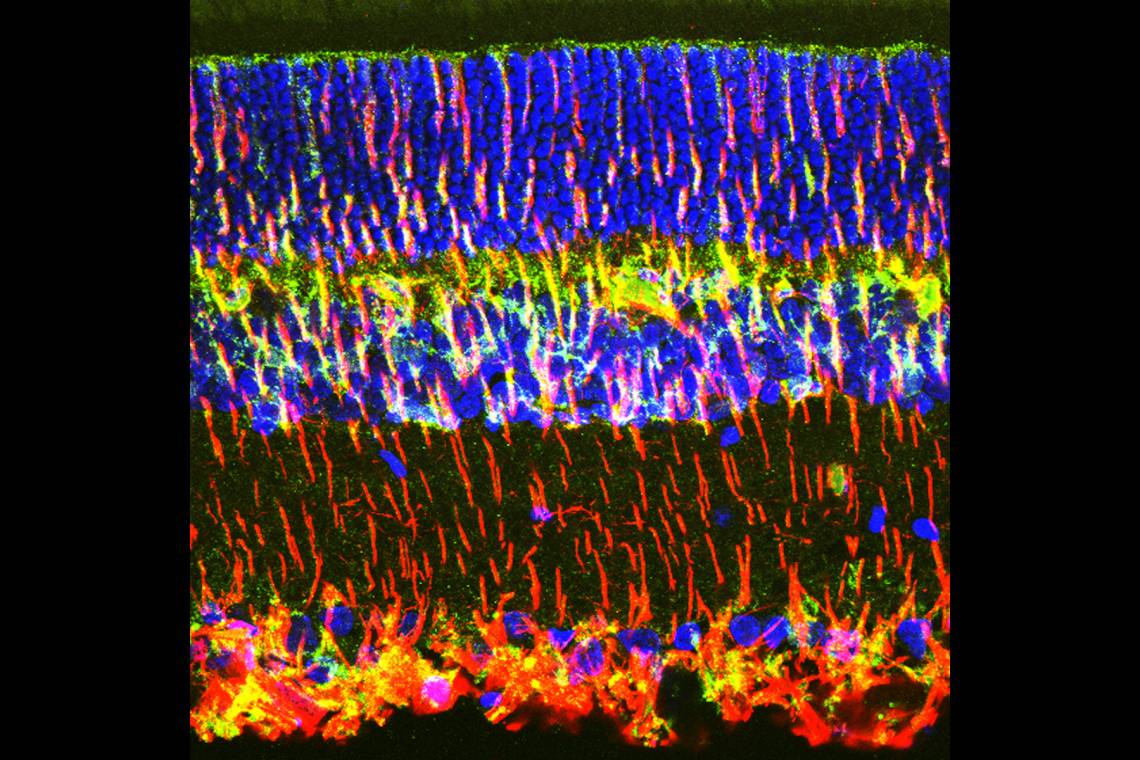
Duke researchers have pinpointed a new therapeutic target for macular degeneration. Clinical trials have shown that injection of human umbilical stem cells, or hUTC, into the retina helps preserve and restore vision in macular degeneration patients. However, the underlying mechanisms behind the therapy remain unknown. Their findings show that hUTC treatment preserves the function of a retinal cell called the Müller glia in rats with degenerative vision loss.
Vital Art and Science Inc. has a U.S. Food and Drug Administration (FDA) clearance to market myVisionTrack, a prescription-only medical device that enables patients with retinal diseases to monitor their vision function between regular visits to their eye-care professional to help ensure they obtain timely care and treatments.
This study, conducted as part of the Latino Americans in Los Angeles County study, assessed the personal and demographic risk factors for proliferative diabetic retinopathy in Latino Americans in Los Angeles County.
In this study, 729 subjects from Los Angeles County University of Southern California Medical Center (LAC + USC), Los Angeles, CA were recruited prospectively from the Center and affiliated clinics between June 2008 and June 2011. Complete personal data and results from systemic and ophthalmic examinations were collected for all enrolled subjects. Laboratory tests such as glycosylated hemoglobin, creatinine levels, and cholesterol levels were collected prospectively by drawing blood at the time of each patient's clinic visit. The main outcome measures were age, gender, type of diabetes mellitus (DM I or II), duration of diabetes mellitus, history of hypertension, history of insulin use, height, weight, and body mass index, smoking history, glycosylated hemoglobin, creatinine levels, and cholesterol levels.