 |
| (c) POSTECH |
Showing posts with label blind. Show all posts
Showing posts with label blind. Show all posts
Friday, March 11, 2022
Smart LED Contact Lenses for Treating Diabetic Retinopathy

Tuesday, May 25, 2021
A new type of Gene Therapy demonstrates the potential to treat Blindness
 |
| (c) Veronique Juvin, Sciartwork |
Doctors have been able to use a form of gene therapy described as optogenetics for the first time to restore partial vision in a blind person. The research team genetically altered retinal ganglion cells to become light-sensitive in a man whose vision was destroyed by retinitis pigmentosa, a genetic disorder that breaks down cells that absorb and convert light into brain signals.
Wednesday, October 21, 2020
Study reveals significant restoration of retinal and visual function following Gene Therapy
 |
| (c) Nature Biomedical Engg |
Published today in Nature Biomedical Engineering, the paper, titled, “Restoration of visual function in adult mice with an inherited retinal disease via adenine base editing,” illustrates the use of a new generation CRISPR technology and lays the foundation for the development of a new therapeutic modality for a wide range of inherited ocular diseases caused by different gene mutations.
Friday, October 9, 2020
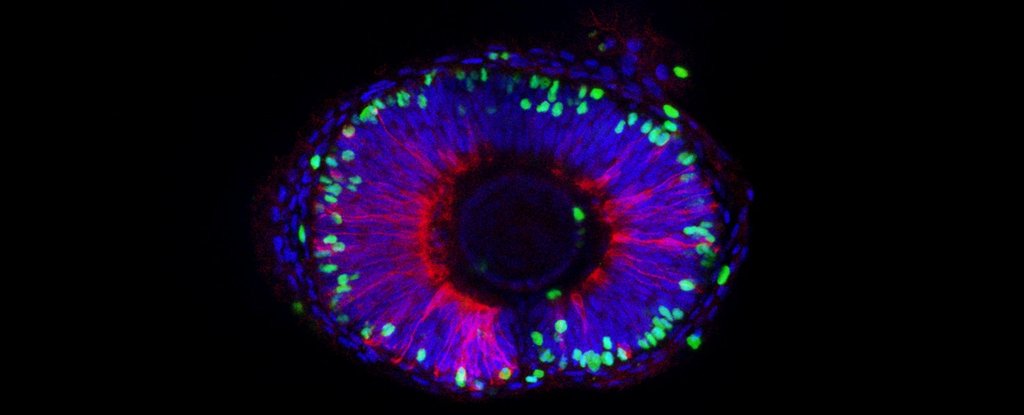
Is it possible for us humans to regenerate our eyes? Research points to a possibility.
 |
| (c) elifesciences.org |
Unlike us, other animals such as zebrafish are able to regenerate this tissue that's so crucial to our power of sight. We share 70 percent of our genes with these tiny little zebrafish, and scientists have just discovered some of the shared genes include the ones that grant zebrafish the ability to grow back their retinas.
Sunday, April 19, 2020
Study finds link between poor diet and age-related macular degeneration
 |
| (c) Univ of Buffalo |
The condition is called late-stage age-related macular degeneration (AMD). AMD is an irreversible condition that affects a person’s central vision, taking away their ability to drive, among other common daily activities.
Thursday, February 20, 2020
Human blindness could be cured utilizing Zebrafish's capability to regenerate its retina
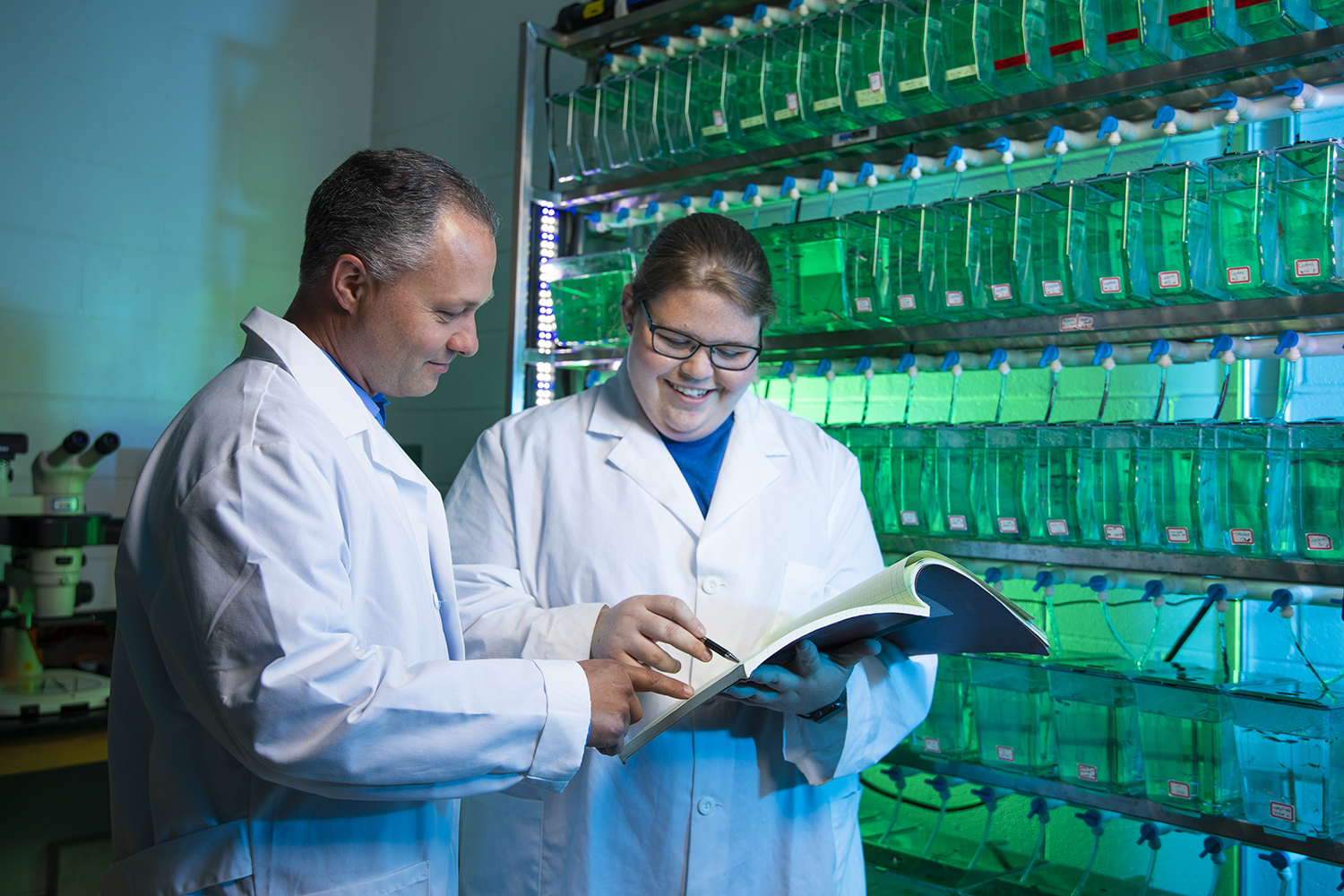
Zebrafish might be tiny, but they come with some supersized powers. But unlike mammals, they are able to regenerate parts of their retina if they become injured. That is why researchers from Vanderbilt University Medical Center are studying how this characteristic of zebrafish can help humans dealing with age-related vision loss due to damage to the retina.
Tuesday, June 18, 2019
Immune system may slow degenerative eye disease

The research was performed by scientists at the National Eye Institute (NEI), part of the National Institutes of Health, and appears in the Journal of Experimental Medicine.
Friday, June 26, 2015
A Blind Architect leads his Berkeley Students to equitable, barrier-eliminating design solutions
Oh, that we could see as clearly as blind architect Chris Downey. Leading his UC Berkeley seminar students to equitable, barrier-eliminating design solutions or consulting on a 170,000-square-foot blind rehab center at the Veterans Affairs center in Palo Alto or filling the stroke seat on his East Bay Rowing Club team, the 52-year-old Piedmont architect and teacher says he lacks sight, but is not without vision.
Wednesday, June 24, 2015
Patients using Argus II report improvement in visual function and quality of life
The three-year clinical trial results of the retinal implant, popularly known as the "bionic eye," have proven the long-term efficacy, safety and reliability of the device that restores vision in those blinded by Retinitis Pigmentosa (RP), a rare, degenerative eye disease. The findings show that the Argus II significantly improves visual function and quality of life for people blinded by RP.
Vitamin A may harm patients with Stargardt and possibly macular degeneration
An Oxford University study has found that reducing the tendency of vitamin A to form toxic clumps could slow down retinal degenerative diseases such as Stargardt disease, a condition that leads to blindness in children and young adults, and in age-related macular degeneration.
Monday, June 22, 2015
FDA approves device to help the blind 'see' via their tongues
The Food and Drug Administration has allowed marketing of a new device that when used along with other assistive devices, like a cane or guide dog, can help orient people who are blind by helping them process visual images with their tongues.
Wednesday, April 15, 2015
Advancements in Retinal Detachment Research Pave the Road to Better Visual Recovery
Editor's notes:
To read more about what is Retinal Detachment, how is it caused, what are the symptoms, and what are the suggested things to do, click here.
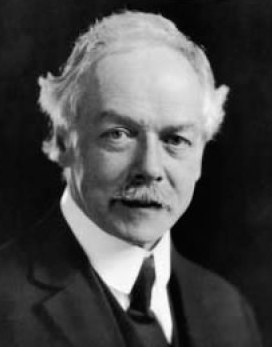
Retinal detachment was the first retinal pathology that could be managed with a surgical intervention. Dr Jules Gonin (pictured on the left - credit) came up with a solution to treat this condition. Before that, all patients with retinal detachment were doomed to blindness. His work from 1902 to 1921, when he recognized that a retinal break was the cause of a retinal detachment - and not a consequence as was largely believed those days - helped kickstart the specialty of retinal disease management. Though his technique, referred to as "ignipuncture", is now obsolete, his pioneering work laid the important foundation. Though his work did not gain recognition for quite some time, and was even opposed by many, he finally got his due in 1929 at the International Ophthalmology Congress in Amsterdam. Since then, his legacy has lived on in the eye hospital in Lausanne that bears his name, in the Gonin Medal awarded by the International Council of Ophthalmology, the Club Jules Gonin, and in a street named after his, the very street that he used to walk from home to the hospital every day.
Tuesday, April 14, 2015
New research reveals significant burden for patients being treated for sight threatening retinal disease

New data presented at the 6th World Congress on Controversies in Ophthalmology shows that the intravitreal injection regimens associated with treating retinal disease can have a detrimental effect on a patient’s quality of life.
New retinal test will provide more information about retinal disease

Stem cell injection may soon reverse vision loss caused by age-related macular degeneration
An injection of stem cells into the eye may soon slow or reverse the effects of early-stage age-related macular degeneration, according to new research from scientists at Cedars-Sinai Board of Governors Regenerative Medicine Institute, published in the journal Stem Cells.
Wednesday, January 28, 2015
Is Avastin better than Lucentis for AMD?
A group of researchers from China have evaluated randomized controlled clinical trials from around the world to study the efficacy and safety of Avastintm (bevacizumab) versus Lucentistm (ranibizumab) in wet (neovascular) age-related macular degeneration (AMD).
Tuesday, January 20, 2015
Will the brain be able to fully adapt to treatment of blindness?
A partial restoration of sight is possible in individuals blind from birth, thanks to the most recent advances in research. However, a group of researchers of the Mind/Brain Center of the University of Trento and of the University of Montréal in Canada have discovered that the functional reorganization of the brain happens in individuals who, for a long period, experienced a long sense deprivation, which could potentially impede complete sight restoration.
Sunday, January 4, 2015
HIV/AIDS drugs that are FDA approved could treat age-related macular degeneration
 |
| from washington.edu |
Tuesday, December 23, 2014
Eyedrops in development for treating conditions such as AMD and Diabetic macular edema
Eye drops are being developed for treating
retina that will likely eliminate the need to inject compounds to the back of
the eye in conditions such as age-related macular degeneration and diabetic macular edema.
 |
| From Scifluor |
Tuesday, October 7, 2014
Research could revolutionise treatment for eye conditions such as AMD
Patients with eye diseases have new hope after researchers at the University of Reading discovered a potential way of making eye drops more effective.
Typically, less than 5% of the medicine dose applied as drops actually penetrates the eye - the majority of the dose will be washed off the cornea by tear fluid and lost.
Typically, less than 5% of the medicine dose applied as drops actually penetrates the eye - the majority of the dose will be washed off the cornea by tear fluid and lost.
Subscribe to:
Posts (Atom)