Showing posts with label stem cells. Show all posts

Monday, September 14, 2020

New OCT technique offers better potential in retinal stem cell and gene therapy treatment


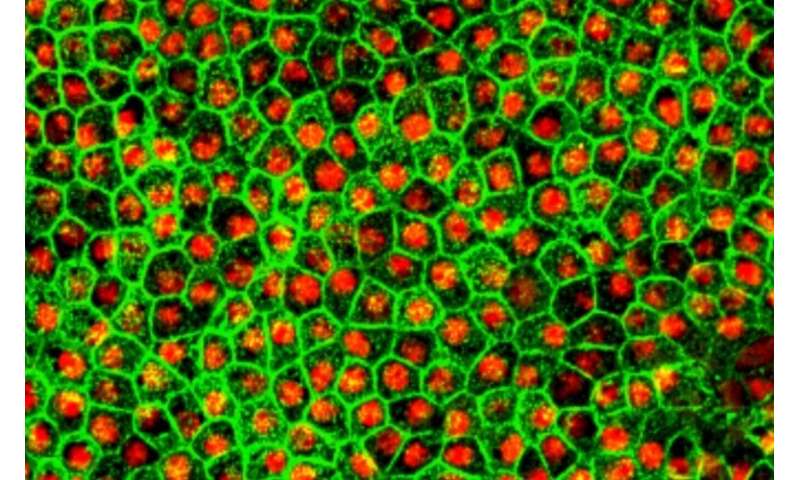
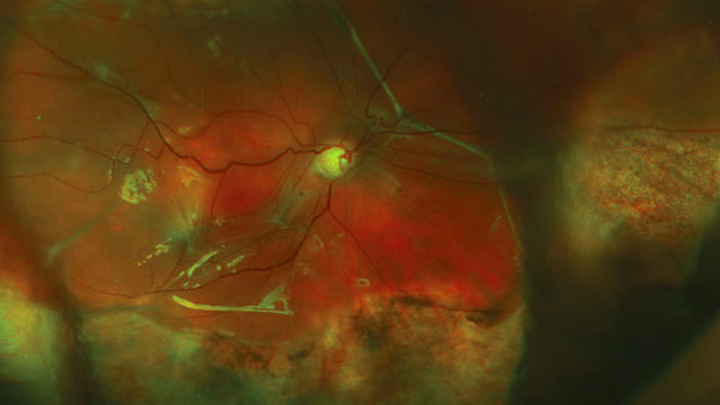
Researchers at the University of Washington have modified the standard process of OCT (optical coherence tomography) to detect minute changes in response to light in individual photoreceptors in the living eye. The technique has potential in the testing of therapies such as stem cells or gene therapy to treat retinal disease.

Monday, August 17, 2020

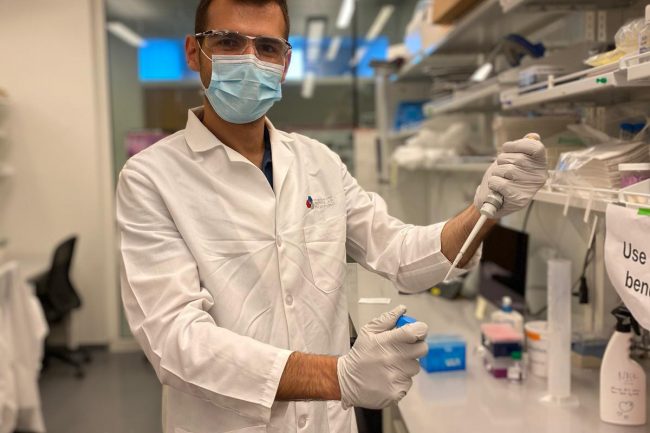
Researchers develop cell injection technique that could help reverse vision loss

University of Toronto Engineering researchers have developed a new method of injecting healthy cells into damaged eyes. The technique could point the way toward new treatments with the potential to reverse forms of vision loss that are currently incurable.

Thursday, April 2, 2020

Embryonic stem cells for treating blindness

Researchers at Karolinska Institutet and St Erik Eye Hospital in Sweden have discovered a way to refine the production of retinal cells from embryonic stem cells for treating blindness in the elderly.

Using CRISPR/Cas9 gene editing, they also modified the cells so that they can hide from the immune system to prevent rejection.

Tuesday, June 25, 2019

A US Court Asks Stem Cell Clinics to Stop Manufacturing and Marketing Products without Regulatory approval

(c) The Atlantic
U.S. District Judge Ursula Ungaro of the Southern District of Florida has issued an order that stops US Stem Cell Clinic LLC, of Weston, Florida, and US Stem Cell Inc., of Sunrise, Florida, and their Chief Scientific Officer Kristin Comella, Ph.D., from manufacturing or distributing any and all stromal vascular fraction (SVF) products, which are adipose (fat) tissue derived stem cell products, until they come into compliance with the law.

Monday, February 25, 2019

Significant Visual Improvement Reported in Patients with Retinitis Pigmentosa in a cell therapy clinical trial

(c) ReNeuron
ReNeuron Group plc, a UK-based company focused on development of cell-based therapeutics, has announced encouraging results from an early stage trial of its cell therapy for retinitis pigmentosa (RP), which, if approved, could be a competitor to Spark/Novartis’s Luxturna (voretigene neparvovec). Unlike the already-approved gene therapy Luxturna, ReNeuron’s cell-based therapy would not be limited to patients with a disease caused by a certain mutation.

Tuesday, September 29, 2015

First patient receives potential new treatment for wet age-related macular degeneration (AMD)

A pioneering trial of a new treatment derived from stem cells for people with wet age-related macular degeneration (AMD) has commenced at Moorfields Eye Hospital following a successful operation on a patient.

Thursday, August 20, 2015

Amniotic membrane derived stem cell transplants show benefit in retinal diseases

(c) Cell Transplantation
A team of researchers at the CHA University in South Korea has successfully transplanted mesenchymal stromal cells (MSCs) derived from human amniotic membranes of the placenta (AMSCs) into laboratory mice modeled with oxygen-induced retinopathy, which is used to simulate many retinal diseases. The treatment aimed at suppressing abnormal angiogenesis (blood vessel growth) which is recognized as the cause of many eye diseases, such as diabetic retinopathy and age-related macular degeneration. The researchers reported that the AMSCs successfully migrated to the retinas of the test animals and, because of the growth factors secreted by the cells, were able to suppress retinal neovascularization.

Wednesday, August 12, 2015

UCI-led team begins first clinical trial of stem cell-based retinitis pigmentosa treatment

Participants are being enrolled in the first clinical trial that tests the use of retinal progenitor cells to treat retinitis pigmentosa. The product of stem cell research at UCI’s Gavin Herbert Eye Institute and Sue & Bill Gross Stem Cell Research Center, these retinal progenitors are similar to stem cells in terms of potential regenerative properties, but they’re specific to the retina.

Wednesday, June 24, 2015

Stem cells for treatment of diabetic retinopathy - positive results in the lab

University of Virginia School of Medicine researchers have taken a significant step forward in their efforts to use stem cells to block vision loss caused by diabetic retinopathy, a condition that affects millions of people with diabetes. The researchers have evaluated the best potential sources for adult stem cells to be used for that purpose, determining that cells taken from donors who do not suffer diabetes likely will be more effective than cells taken from patients' own bodies.

Friday, May 15, 2015

Hydrogels boost ability of stem cells to restore eyesight

Scientists and engineers in Toronto have made a breakthrough in cell transplantation using a gel-like biomaterial that keeps cells alive and helps them integrate better into tissue. In two early lab trials, this has already shown to partially reverse blindness and help the brain recover from stroke.

Tuesday, April 14, 2015

Monday, December 15, 2014

Clinical trial for autologous bone marrow stem cells as treatment for AMD & RP shows promise

A phase 1 clinical trial utilizing human bone marrow CD34+ stem cells for patients with retinal vascular occlusion, hereditary or non-exudative age-related macular degeneration (AMD), or retinitis pigmentosa (RP) has shown safety and feasibility.

Tuesday, October 14, 2014

Retinal Pigment Epithelial cells derived from stem cells show positive long term results

Since they were first derived more than three decades ago, embryonic stem cells have been proposed as a source of replacement cells in regenerative medicine, but their plasticity and unlimited capacity for self-renewal raises concerns about their safety, including tumour formation ability, potential immune rejection, and the risk of differentiating into unwanted cell types. We report the medium-term to long-term safety of cells derived from human embryonic stem cells (hESC) transplanted into patients.