Showing posts with label Diabetes. Show all posts

Saturday, December 3, 2022

Does Anti-VEGF Injections Increase the likelihood of Tractional Retinal Detachment in Proliferative Diabetic Retinopatht?

(c) eyerounds.org
Is there an increased risk for tractional retinal detachment (TRD) in proliferative diabetic retinopathy (PDR) associated with intravitreal injections alone compared with other treatment regimens? That's the question that researchers at Perelman School of Medicine at the University of Pennsylvania sought an answer for. 

Thursday, November 10, 2022

Cholesterol and diabetes drugs may lessen risk of degenerative eye disease of aging


Regular use of drugs to lower cholesterol and control type 2 diabetes may lessen the risk of age related macular degeneration, a degenerative eye disease that is associated with aging. This is a finding from a pooled data analysis of the available evidence, which has been published in the British Journal of Ophthalmology.

The results show that these common drugs are linked to lower prevalence of AMD in European populations.

Friday, March 11, 2022

Smart LED Contact Lenses for Treating Diabetic Retinopathy

(c) POSTECH
A team of scientists from Pohang University of Science and Technology in #SouthKorea and their collaborators have recently developed a smart contact lens-type wearable device to prevent diabetic retinopathy and treat it in its early stages.

Monday, February 15, 2021

Metformin may help in reducing the risk for Macular Degeneration


In a large case-control study using a national database of patients, metformin use was associated with reduced odds of developing age-related macular degeneration (AMD). This association was dose dependent, with the greatest benefit at low to moderate doses. When looking only at patients with diabetes, the authors note preservation of the dose-dependent decrease in the odds of patients developing AMD. Metformin does not appear to be protective in patients with diabetes and coexisting diabetic retinopathy. This study suggests that metformin may be useful as a preventive therapy for AMD and provides the basis for potential prospective clinical trials.

Saturday, October 24, 2020

A commonly used anti-VEGF may not be as effective in treating diabetic macular edema in black patients

(c) peimag.com
A new study indicates a medication frequently used to treat diabetic macular edema, the most common cause of blindness in people with diabetes, is less effective when used to treat the condition in Black patients. 

Sunday, August 23, 2020

A healthy lifestyle for cardiovascular health also promotes good eye health

In a new study, investigators found that ideal cardiovascular health, which is indicative of a healthy lifestyle, was associated with lower odds for ocular diseases especially diabetic retinopathy. These findings appearing in the American Journal of Medicine, published by Elsevier, suggest that interventions to prevent cardiovascular diseases may also hold promise in preventing ocular diseases.

Tuesday, May 5, 2020

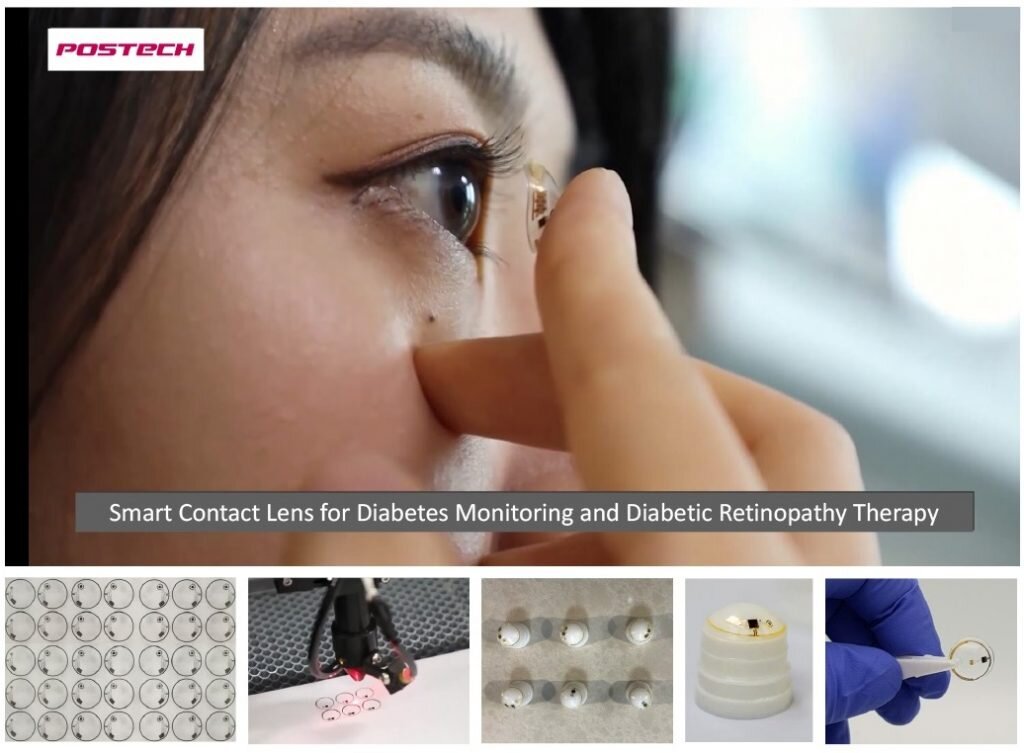
Smart contact lenses that diagnose and treat diabetes and diabetic retinopathy

(c) POSTECH
What if you could control the secretion of insulin just by wearing contact lenses?

A research team at Pohang University of Science and Technology (POSTECH) in South Korea developed wirelessly driven a 'smart contact lens' technology that can just that too - it can detect diabetes and further treat diabetic retinopathy just by a person wearing them.


Monday, December 3, 2018

A novel drug for treatment of diabetic retinopathy

(c) Centenary Institute, Sydney, Australia
Scientists at the Centenary Institute have developed a novel drug which could potentially be used to effectively treat patients with diabetic retinopathy.

Diabetic retinopathy often occurs in diabetic patients, even when their blood sugar levels are controlled. In diabetic retinopathy, the tiny blood vessels in the retina are damaged and can leak fluid or haemorrhage, often leading to vision loss.

Monday, March 19, 2018

Regeneron's PANORAMA study for Eylea in Diabetic Retinopathy shows Promise

(c) PMLive
Regeneron Pharmaceuticals, Inc. announced positive topline data from its Phase III PANORAMA clinical trial of Eylea (aflibercept) injection in moderately severe to severe non-proliferative diabetic retinopathy. Diabetic retinopathy, which affects about eight million people, is the result of microvascular damage to the blood vessels in the retina related to lack of blood sugar control in diabetic patients.

Tuesday, October 24, 2017

Researchers identify a key protein in Diabetic Retinopathy

Researchers at University of Utah Health have identified a protein, ADP-ribosylation factor 6 (ARF6), which is crucial for the development of diabetic retinopathy. Published in The Journal of Clinical Investigation, they identified a compound, NAV-2729, which inhibits or blocks ARF6, reducing the chances of development of diabetic retinopathy.

Tuesday, September 1, 2015

When do you recommend eye exam for a child with type 1 diabetes?

A new study suggests that the occurrence of advanced forms of a diabetic eye disease remains low among children living with diabetes, regardless of how long they have had the disease or their ability to keep blood sugar levels controlled. Researchers are therefore recommending that most children with type 1 diabetes delay annual diabetic retinopathy screenings until age 15, or 5 years after their diabetes diagnosis, whichever occurs later.

Thursday, August 20, 2015

Amniotic membrane derived stem cell transplants show benefit in retinal diseases

(c) Cell Transplantation
A team of researchers at the CHA University in South Korea has successfully transplanted mesenchymal stromal cells (MSCs) derived from human amniotic membranes of the placenta (AMSCs) into laboratory mice modeled with oxygen-induced retinopathy, which is used to simulate many retinal diseases. The treatment aimed at suppressing abnormal angiogenesis (blood vessel growth) which is recognized as the cause of many eye diseases, such as diabetic retinopathy and age-related macular degeneration. The researchers reported that the AMSCs successfully migrated to the retinas of the test animals and, because of the growth factors secreted by the cells, were able to suppress retinal neovascularization.

Thursday, June 25, 2015

Results in Ocuvia Diabetic Macular Edema Study show promise

ReVIEW study outcomes so far indicated that Ocuvia, a investigational topical ophthalmic formulation to treat the underlying defects in mitochondria in retinal diseases, shows promise in patients with diabetic macular edema.

Wednesday, June 24, 2015

Stem cells for treatment of diabetic retinopathy - positive results in the lab

University of Virginia School of Medicine researchers have taken a significant step forward in their efforts to use stem cells to block vision loss caused by diabetic retinopathy, a condition that affects millions of people with diabetes. The researchers have evaluated the best potential sources for adult stem cells to be used for that purpose, determining that cells taken from donors who do not suffer diabetes likely will be more effective than cells taken from patients' own bodies.

Monday, June 15, 2015

New Protein found in diabetic retinopathy may prevent the disease


Researchers have found a new protein that appears to be significantly responsible for the growth of new vessels in the eyes of patients with diabetes. Treatment targeted at this protein is likely to prevent the growth of these blood vessels and thus prevent blindness.

Wednesday, June 10, 2015

Researchers devise a better way to potentially avert blindness due to diabetic retinopathy

(c) USC Translational Imaging Center
Researchers have developed a new non-invasive technique that images the retina to quickly screen patients for diabetic retinopathy.

Wednesday, April 22, 2015

Salicylates may improve retinal function and reduce insulin resistance in retina of type 2 diabetics


Research led by scientists at Wayne State University, Detroit, Michigan, published in PLoS One in April 2015, has demonstrated that salicylate may improve retinal function by enhancing insulin signaling in the retina of type 2 diabetic animal models and in cultured retinal cells.

Wednesday, April 15, 2015

Advancements in Retinal Detachment Research Pave the Road to Better Visual Recovery

Editor's notes:

To read more about what is Retinal Detachment, how is it caused, what are the symptoms, and what are the suggested things to do, click here.

Retinal detachment was the first retinal pathology that could be managed with a surgical intervention. Dr Jules Gonin (pictured on the left - credit) came up with a solution to treat this condition. Before that, all patients with retinal detachment were doomed to blindness. His work from 1902 to 1921, when he recognized that a retinal break was the cause of a retinal detachment - and not a consequence as was largely believed those days - helped kickstart the specialty of retinal disease management. Though his technique, referred to as "ignipuncture", is now obsolete, his pioneering work laid the important foundation. Though his work did not gain recognition for quite some time, and was even opposed by many, he finally got his due in 1929 at the International Ophthalmology Congress in Amsterdam. Since then, his legacy has lived on in the eye hospital in Lausanne that bears his name, in the Gonin Medal awarded by the International Council of Ophthalmology, the Club Jules Gonin, and in a street named after his, the very street that he used to walk from home to the hospital every day.


Saturday, January 17, 2015

New drugs in the pipeline target novel pathways for treatment of diabetic retinopathy

from NEI


There is exciting on-going research in the field of treatments for patients with diabetic macular edema (DME). There is a long list of drugs in the pipeline for treating this disease that affects a significant number of people around the world. Pipeline drugs target novel pathways to treat diabetic eye disease.