Showing posts with label Angiogenesis. Show all posts
Showing posts with label Angiogenesis. Show all posts
Monday, August 17, 2020
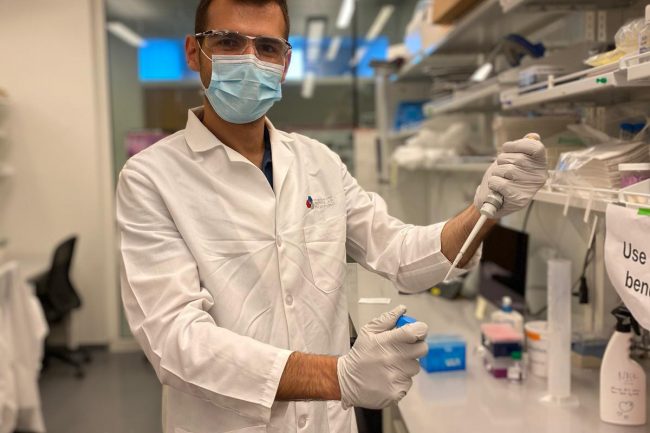
Researchers develop cell injection technique that could help reverse vision loss

Tuesday, March 19, 2019
Neovascular AMD: Bevacizumab Injection Increases Angiogenic Biomarkers
 |
| Dr. Thiago Cabral |
Monday, December 3, 2018
A novel drug for treatment of diabetic retinopathy
 |
| (c) Centenary Institute, Sydney, Australia |
Diabetic retinopathy often occurs in diabetic patients, even when their blood sugar levels are controlled. In diabetic retinopathy, the tiny blood vessels in the retina are damaged and can leak fluid or haemorrhage, often leading to vision loss.
Monday, February 12, 2018
RG7716 improves visual acuity in subjects with Diabetic Macular Edema in a Phase 2 study
 |
| (c)Pharmacodia.com |
Friday, November 10, 2017
White Paper by Angiogenesis Foundation suggests some key action points to help control AMD

Thursday, August 20, 2015
Amniotic membrane derived stem cell transplants show benefit in retinal diseases
 |
| (c) Cell Transplantation |
Tuesday, April 14, 2015
New research reveals significant burden for patients being treated for sight threatening retinal disease

New data presented at the 6th World Congress on Controversies in Ophthalmology shows that the intravitreal injection regimens associated with treating retinal disease can have a detrimental effect on a patient’s quality of life.
Wednesday, January 28, 2015
Is Avastin better than Lucentis for AMD?
A group of researchers from China have evaluated randomized controlled clinical trials from around the world to study the efficacy and safety of Avastintm (bevacizumab) versus Lucentistm (ranibizumab) in wet (neovascular) age-related macular degeneration (AMD).
Monday, January 19, 2015
AMD may be triggered by tiny mineral deposits in retina
Scientists from the University of Maryland School of Medicine have found that tiny lumps of calcium phosphate may be an important triggering factor for age-related macular degeneration (AMD). This is the first time these mineral deposits have been implicated in the disease, which affects more than 10 million Americans.
Saturday, January 17, 2015
New drugs in the pipeline target novel pathways for treatment of diabetic retinopathy
 |
| from NEI |
There is exciting on-going research in the field of treatments for patients with diabetic macular edema (DME). There is a long list of drugs in the pipeline for treating this disease that affects a significant number of people around the world. Pipeline drugs target novel pathways to treat diabetic eye disease.
Sunday, January 4, 2015
HIV/AIDS drugs that are FDA approved could treat age-related macular degeneration
 |
| from washington.edu |
Monday, December 15, 2014
New treatment potential for babies with Retinopathy of Prematurity
A gene known to play a major role in constricting blood vessels also appears to be a major player in the aberrant blood vessel growth that can destroy the vision of premature babies such as in Retinopathy of Prematurity and possibly in Diabetic Retinopathy.
Subscribe to:
Posts (Atom)