Showing posts with label Research. Show all posts

Sunday, April 19, 2020

Study finds link between poor diet and age-related macular degeneration

(c) Univ of Buffalo
Participants who ate a diet high in red and processed meat, fried food, refined grains and high-fat dairy were three times more likely to develop an eye condition that damages the retina and affects a person’s central vision, according to the results of a study conducted at University of Buffalo and published in the journal BMJ Ophthalmology.

The condition is called late-stage age-related macular degeneration (AMD). AMD is an irreversible condition that affects a person’s central vision, taking away their ability to drive, among other common daily activities.

Tuesday, June 18, 2019

Immune system may slow degenerative eye disease

A new study shows that the complement system, part of the innate immune system, plays a protective role to slow retinal degeneration in a mouse model of retinitis pigmentosa, an inherited eye disease. This surprising discovery contradicts previous studies of other eye diseases suggesting that the complement system worsens retinal degeneration. 

The research was performed by scientists at the National Eye Institute (NEI), part of the National Institutes of Health, and appears in the Journal of Experimental Medicine.


Wednesday, June 17, 2015

Neuronal-Glial Interactions in Retinal Disease

Matthew Zabel, of the National Eye Institute, talks about Neuronal-Glial Interactions in Retinal Disease.

Friday, May 15, 2015

Hydrogels boost ability of stem cells to restore eyesight

Scientists and engineers in Toronto have made a breakthrough in cell transplantation using a gel-like biomaterial that keeps cells alive and helps them integrate better into tissue. In two early lab trials, this has already shown to partially reverse blindness and help the brain recover from stroke.

Wednesday, April 15, 2015

Is the red-green color blindness gene therapy cure ready for humans?

Researchers at the Eye Institute of the University of Washington have successfully used gene therapy to cure color blindness in adult monkeys. In the photo on the left (photo credit), a squirrel monkey, who was treated for red-green color blindness, is seen enjoying a feast of colored fruits and vegetables. The image was digitally altered to simulate what the scene would look like to a person (or monkey) with red-green color blindness. 

Advancements in Retinal Detachment Research Pave the Road to Better Visual Recovery

Editor's notes:

To read more about what is Retinal Detachment, how is it caused, what are the symptoms, and what are the suggested things to do, click here.

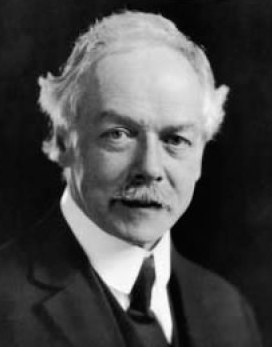
Retinal detachment was the first retinal pathology that could be managed with a surgical intervention. Dr Jules Gonin (pictured on the left - credit) came up with a solution to treat this condition. Before that, all patients with retinal detachment were doomed to blindness. His work from 1902 to 1921, when he recognized that a retinal break was the cause of a retinal detachment - and not a consequence as was largely believed those days - helped kickstart the specialty of retinal disease management. Though his technique, referred to as "ignipuncture", is now obsolete, his pioneering work laid the important foundation. Though his work did not gain recognition for quite some time, and was even opposed by many, he finally got his due in 1929 at the International Ophthalmology Congress in Amsterdam. Since then, his legacy has lived on in the eye hospital in Lausanne that bears his name, in the Gonin Medal awarded by the International Council of Ophthalmology, the Club Jules Gonin, and in a street named after his, the very street that he used to walk from home to the hospital every day.


Tuesday, April 14, 2015