A new study published in The American Journal of Pathology provides new evidence that immune cells enter the retina via the body's standard pathway, identifying Platelet Endothelial Cell Adhesion Molecule (PECAM; also known as CD31) as the gatekeeper and neutrophils as proresolving mediators. This research offers new insights into how eye inflammation develops and could lead to better-targeted treatment options.
Wednesday, September 16, 2026

Tuesday, April 22, 2025
Stimulating the retina to allow people to see a brand new color

In their study published in the journal Science Advances, the group identified certain photoreceptors in volunteers and then stimulated them to allow those volunteers to see the unique color, which the team has named "olo."
NEI-funded researchers “push the ENVLPE” with new virus-like particle to fix mutations causing blindness
 |
| (c) Wikipedia |
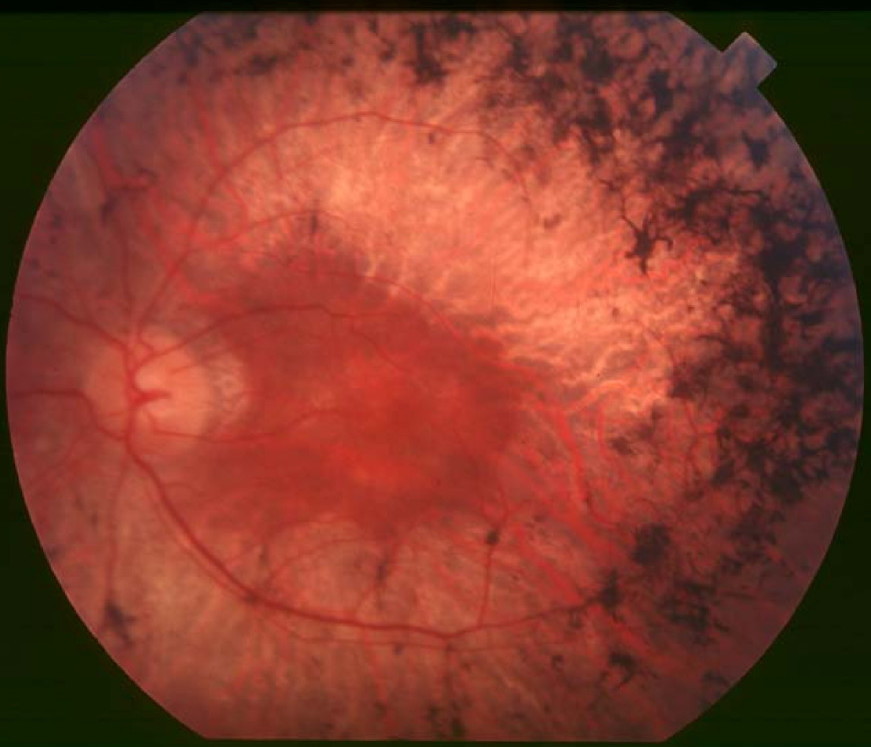
A research team funded by the National Eye Institute have developed a new virus-like particle (VLP) to enhance how specialists edit proteins causing inherited diseases.
This new VLP system, called engineered nucleocytosolic vehicles for loading of programmable editors — or ENVLPE — efficiently corrected two mutations associated with blindness. The researchers anticipate this CRISPR gene editing approach also being used to treat other inherited diseases, such as cystic fibrosis and familial hypercholesterolemia.
Friday, January 20, 2023
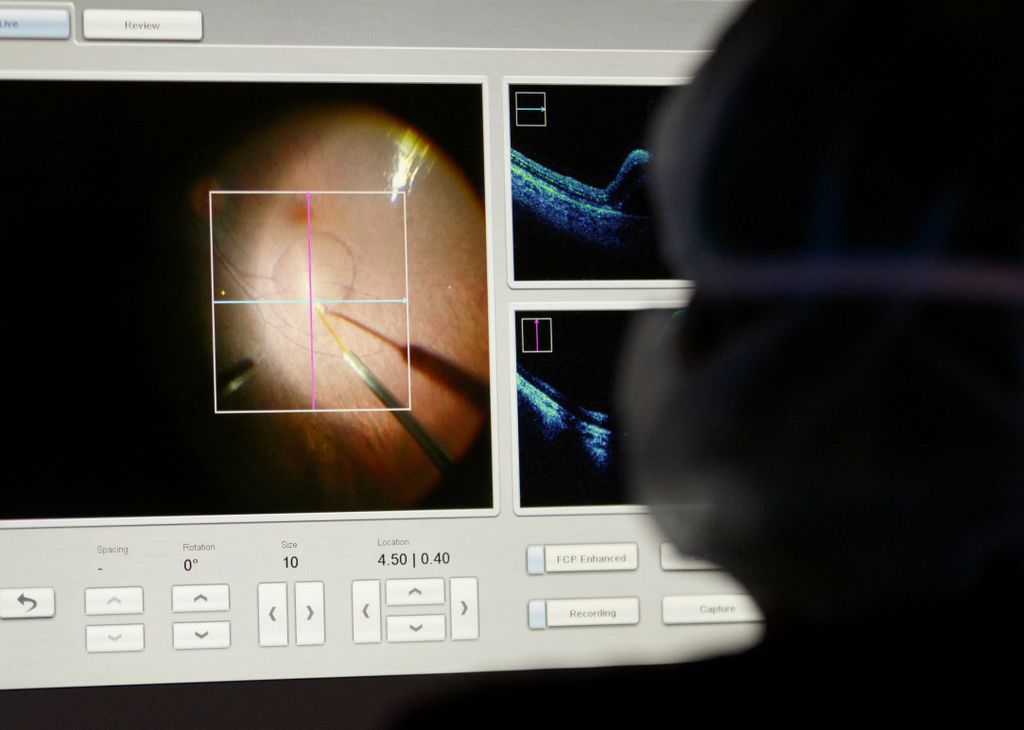
Nanotechnology may improve gene therapy for blindness
Thursday, January 12, 2023
Obesity linked to Macular Degeneration
%20msdmanuals.jpg) |
| (c) MSDManuals |
The research at Hôpital Maisonneuve-Rosement, in Montreal, shows how life stressors such as obesity reprogram immune system cells and make them destructive to the eye as it ages.
Monday, January 9, 2023
Two separate eye diseases may contribute to Age-related Macular Degeneration
%20Prevent%20Blindness.png) |
| (c) Prevent Blindness |
According to a news release, the research is the first to demonstrate that two different types of deposits in the retina may contribute to early AMD, which can progress to advanced AMD and blindness. These two diseases could be diagnosed, studied, and treated separately with appropriate early intervention to prevent vision loss and other complications.
Saturday, December 3, 2022
Does Anti-VEGF Injections Increase the likelihood of Tractional Retinal Detachment in Proliferative Diabetic Retinopatht?
 |
| (c) eyerounds.org |
Is there an increased risk for tractional retinal detachment (TRD) in proliferative diabetic retinopathy (PDR) associated with intravitreal injections alone compared with other treatment regimens? That's the question that researchers at Perelman School of Medicine at the University of Pennsylvania sought an answer for.
Thursday, December 1, 2022
New potential mechanism for vision loss discovered
 |
| (c) ASRS Image Bank |
The authors report on their research in the journal Nature Communications, which paves the way for completely new research approaches, especially in connection with age-related macular degeneration (AMD).
Tuesday, November 29, 2022
The HAWK Extension Study outcomes with Brolucizumab in nAMD similar to those seen in Pivotal Phase 3 Studies

Best-corrected visual acuity gain and central subfield thickness reduction observed at the end of the core study were maintained to Week 24 of the extension study. There was no indication of difference in the safety profile of the brolucizumab 6 mg drug product intended for commercialization and the brolucizumab 3 mg or 6 mg drug product used in the Phase III clinical trials.
Tuesday, November 15, 2022
Treating Age-Related Macular Degeneration before Decline in Visual Impairment

Thursday, November 10, 2022
Cholesterol and diabetes drugs may lessen risk of degenerative eye disease of aging
 |
The results show that these common drugs are linked to lower prevalence of AMD in European populations.
Wednesday, July 13, 2022
Blinding eye disease is strongly associated with heart disease and stroke
 |
| (c) Ophthalmology Retina |
Patients with a specific form of age-related macular degeneration (AMD), a leading cause of blindness in the United States, are at significant risk for cardiovascular disease and stroke, according to new research from New York Eye and Ear Infirmary of Mount Sinai. This study, published in the July issue of Retina, is the first to demonstrate a link between the disorders.
Friday, March 11, 2022
Smart LED Contact Lenses for Treating Diabetic Retinopathy
 |
| (c) POSTECH |
Tuesday, May 25, 2021
A new type of Gene Therapy demonstrates the potential to treat Blindness
 |
| (c) Veronique Juvin, Sciartwork |
Doctors have been able to use a form of gene therapy described as optogenetics for the first time to restore partial vision in a blind person. The research team genetically altered retinal ganglion cells to become light-sensitive in a man whose vision was destroyed by retinitis pigmentosa, a genetic disorder that breaks down cells that absorb and convert light into brain signals.
Thursday, March 11, 2021
Evidence of Retinal damage may indicate increased risk of Stroke and Dementia
 |
| (c) Progress in Retinal & Eye Research |
Wednesday, March 10, 2021
New Study links Alzheimer's disease to Age-related Macular Degeneration
 |
| (c) Cells [link below] |
Tuesday, February 23, 2021
New therapeutic approach to treating Age-related Macular Degeneration

Monday, February 15, 2021
Metformin may help in reducing the risk for Macular Degeneration

Saturday, October 24, 2020
A commonly used anti-VEGF may not be as effective in treating diabetic macular edema in black patients
 |
| (c) peimag.com |
Thursday, October 22, 2020
Artificial Intelligence to predict heart disease via the eyes
 |
| (c) iaidl.org |
An international collaboration of researchers has developed an autonomous artificial intelligence that is able to predict the risk of cardiovascular disease in patients through the blood vessels of the retina. The results of the study were published in the journal Nature Biological Engineering.
Subscribe to:
Posts (Atom)